Why a cordless window vac?
Cordless window vacuums are battery-powered tools that suck cleaning water off glass, leaving it streak-free with no wiping needed. Once a bit of a novelty, they’ve become genuinely useful kit for households in the last decade.
I’m a professional window cleaner and I don’t use one on my jobs — a squeegee is faster for full-time work. But at home they earn their keep for shower screens, condensation, skylights, small panes and any indoor glass where you don’t want drips everywhere.
If you’ve decided you want one, here’s my honest breakdown of what to look for and which ones are worth buying in 2026.
What to look for
Battery life. Check the minutes of runtime on a full charge. Most modern vacs give 30 to 100 minutes. The cheap ones cut out after 20 minutes, which is frustrating if you’re halfway through a big bathroom.
Battery type. Removable batteries are better. You can charge a spare and swap over on a long job. Built-in batteries are a pain because when they eventually die (and all batteries eventually die), you’re binning the whole unit.
Tank capacity. Bigger tank means fewer trips to the sink to empty it. 150 to 200ml is usually plenty for domestic work.
Weight. You’ll be holding this thing above your head on high windows. A lighter unit matters more than the spec sheet suggests. Anything over 900 grams gets tiring fast.
Interchangeable heads. Some vacs come with a narrow head for small panes and a wide head for big windows. The narrow head is genuinely useful on UK sash windows with lots of small panes.
Noise level. They’re all noisy, but some are much worse than others. Have a listen before you buy if you can — you’ll be using it near kids and partners who might not thank you.
Indicator light. A battery low indicator is essential. Without one, you never know when it’s about to die.
The main contenders
Karcher
Karcher basically invented the category. They’ve got about five different models in their range, from a budget WV 2 up to a premium WV 6 Plus.
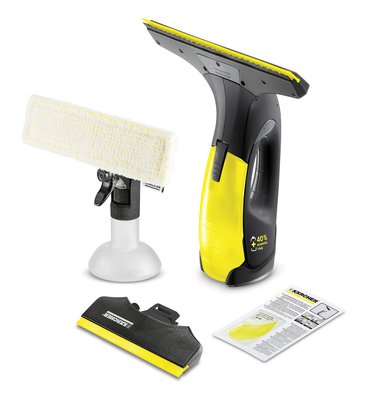
What you’re paying for as you go up the range: longer battery life, bigger tanks, extension handles for high windows, and a better cleaning spray attachment. The mid-range WV 5 is usually the sweet spot for home use.
The blade rubber is the single most important part of any window vac and Karcher’s rubber is consistently the best in the industry. Replacements are easy to find and fit in seconds.
Downside: they’re the most expensive brand by some margin.
Bosch
Bosch make a cordless window vac called the GlassVAC that competes directly with Karcher. It’s well built, lighter than the equivalent Karcher, and usually a bit cheaper.
The blade rubber is good. The battery is removable. Tank is a decent size. The only minor niggle is that fewer retailers stock replacement blades, so you’re more likely to order them online.
Leifheit
Leifheit is a German homecare brand that makes a respectable mid-priced window vac. Build quality is good, the unit is light, and they do a high-reach version with a telescopic handle that’s genuinely useful for patio doors and conservatory roofs.
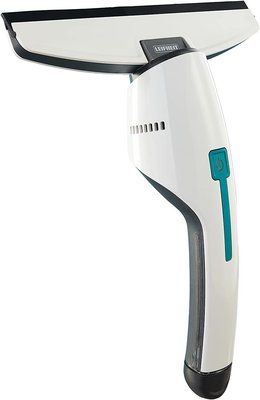
Battery life is shorter than Karcher or Bosch, but for a domestic user that’s usually not a dealbreaker.
Own-brand budget units
There are plenty of cheap window vacs on Amazon, Argos and the big supermarkets. Prices start around £25.
I’m going to be honest: most of them aren’t worth buying. The blades streak, the suction is weak, the tanks leak, and the battery dies within a year. If you’ve got £25 to spend, you’re better off buying a proper squeegee and a pack of microfibre cloths. You’ll get better results.
If your budget is under £50, skip the window vac and go manual.
My honest pick for different users
For the occasional user who just wants to do shower screens and condensation: A basic Karcher WV 2 or a Bosch GlassVAC Solo. Both under £70 and both do the job well for years.
For a busy household that’ll use it on windows, skylights and conservatories: Karcher WV 5 Premium or Bosch GlassVAC with the extension accessories. £100-£140. Longer battery, more heads, better build.
For a larger property or someone who wants the professional experience: Karcher WV 6 Plus with the extension pole and accessory kit. £160-£200. Probably overkill for a semi but lovely to use.
The maintenance that nobody does
I said earlier that the blade rubber is the most important part. Here’s how to keep it working:
Wipe the blade dry after every use. Don’t just put the vac away wet. Water left on the rubber eventually warps and stretches it.
Empty and rinse the tank after every session. Water left in the tank grows bacteria and starts smelling within a week. A 30 second rinse stops this.
Keep it out of direct sunlight. Sunlight degrades the rubber. Store it in a cupboard or a cool utility room, not on a windowsill.
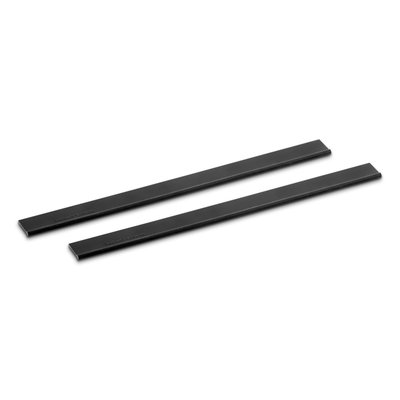
Replace the blade yearly. The rubber wears out with use. Once it starts streaking, buy a new one — they’re £8 to £15 depending on brand. Don’t persevere with a worn blade for months.
Who shouldn’t buy one
A window vac is the wrong tool if:
- You want to clean the outside of a whole house in one go. Squeegee and pole is better.
- You’ve got a huge pane of glass like a bifold or big patio door. Manual squeegee is quicker.
- You’re on a tight budget. Under £50 you won’t get a good one.
- You can’t reliably remember to charge it. They’re hopeless on a flat battery.
For everyone else, a cordless window vac is a lovely bit of kit and I genuinely recommend the better models.
Need a professional instead?
If you’d rather have your windows properly cleaned without buying anything, I cover Watford and surrounding areas. Free quote, pure water system, no fuss. Give me a call or drop me a WhatsApp.